


Dear Friend,
A few months ago, I took an innocent picture of one of my classic weekend mornings at a nearby café – a journal, a book, and a coffee in hand. I shared it on Substack. Days later, for reasons unknown to me, the post took off.
It received 2,000 likes over the following weeks, which was a whopping number for someone like myself. I gained new subscribers almost instantly which I didn’t feel like I earned, offering the closest taste I’ve had to Substack virality. When I posted other Notes around that time, each would suddenly gain 200-or-so likes and a handful of responses.
As a budding Substack writer with the hope of ‘making it’ on this platform, the stream of likes and validation glowed to me like a river of promise. It feels like I struck the mysterious Substack pot of gold. When an essay I wrote on my birthday became my most popular one, outperforming all my others, my self-aggrandisement only persisted. Surely I’d finally unlocked the algorithm and paved my way to Substack success.
Surely?
I. The same song sung differently
The stats continued to do wonders for a good few weeks with little intervention, the causes still unknown to me. Being seen on Substack land had infused my love of writing with fresh dopamine. What occurred after seemed only natural: The crash.
After publishing two essays and a handful of other Notes, the algorithm fairy left me. Metrics became single digits. None of my tried-and-tested ‘formulas’ seemed to work.
I questioned whether I was producing enough, whether my words, my thoughts were interesting enough. Call it the cycle of grief, or just the experience of being humbled, but I finally reflected and asked myself: What am I doing?
I was so easily ready to diminish my efforts only because I have subconsciously joined the race to appear candidly intellectual on Substack.
And doesn’t it all sound familiar? This sing-and-dance of choosing the right caption and picking the right photos and waiting for the likes to come in?
There was a time when we all flocked to Substack to break away from short-form, thoughtless social media. Now, it has morphed itself into the same type of machine.
Only it demands from us a different type of performance.
II. Scenes of a modern life
While waiting to board my flight to Amsterdam, a mother takes the waiting room seat in front of me, pushing a stroller accompanied by two toddler boys. They sit by the sunny side of the room, against the glass wall that overlooks the plane on the tarmac.
“Sit over here!” she says, smiling to her older son. She gently nudges him to sit against the glass, facing her. A recording phone is ready in her other hand.
I drift in and out of overhearing them, and after five minutes, it occurs to me that she is mouthing the words for her children to say on camera. “Bye bye,” the boy says, eyes fixed on his mother – her lips enunciate clearly but silently on the other side of the phone. See you very soon, she mouths, her eyes wide and anticipating. “See you very soon!” the boy repeats.
I felt torn. Can something be both endearing and saddening at the same time?
Upon landing in Amsterdam, I make my way to a café I always visit each time I’m in the city. Nestled inside an old, dilapidated church, I enter and take a seat in their upper attic, with a window overlooking the canals. The morning is sunny, and too warm already. From where I sit, I people-watch residents and tourists strolling across the bridge.
Every five minutes or so, it’s someone with a tripod stick. A man, together with his friends, records the bridge, the church, and the river – a panoramic view, gliding his phone with smoothness and skill. Once he’s done, he looks down at his creation on his screen, and smiles to himself, leaving the bridge without looking up.
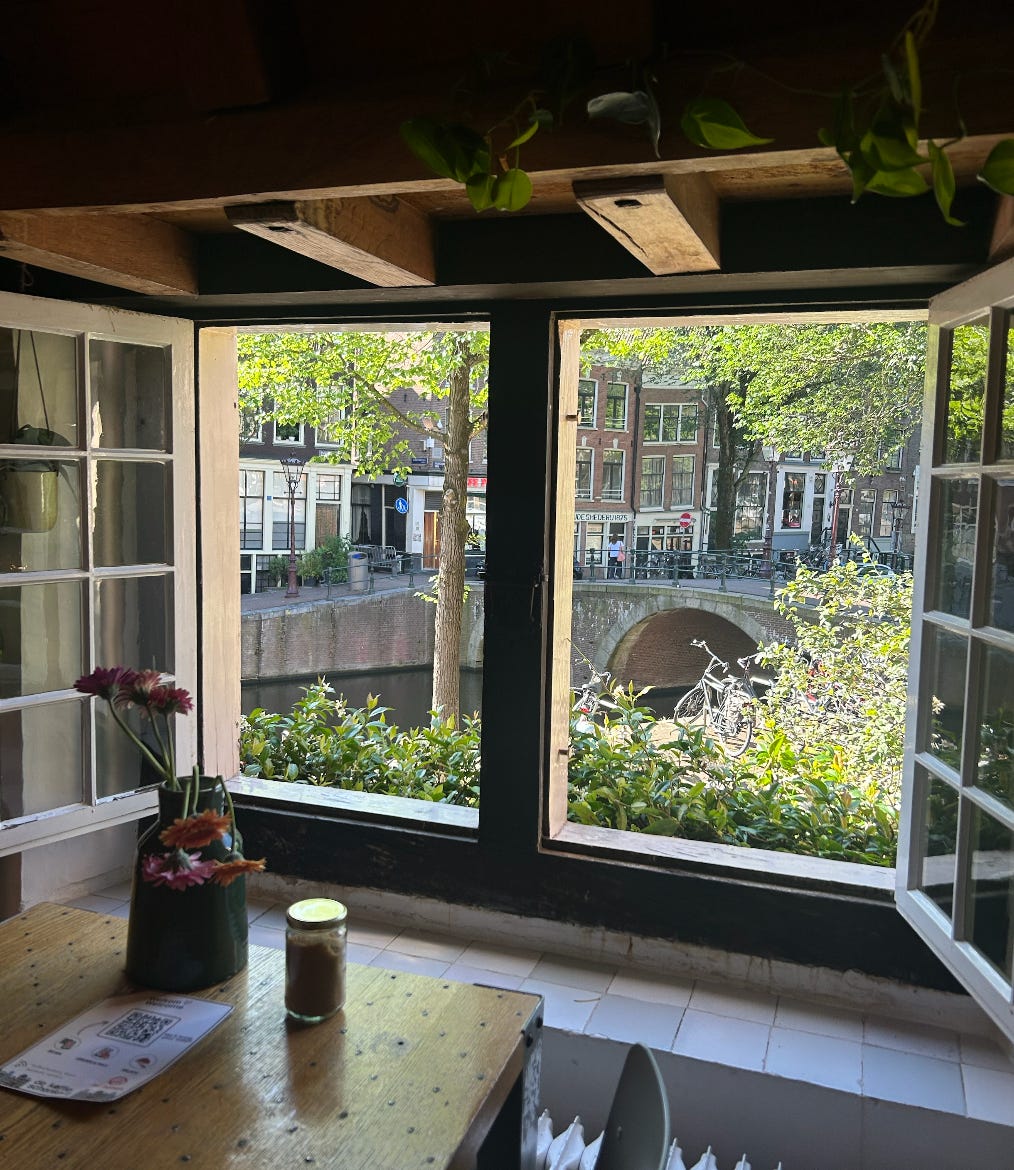
Again, I felt torn. These were scenes of a modern life, but also, scenes of humans being humans. Perhaps it’s their first trip overseas. Perhaps it’s the last time their boys will be this little ever again.
I too am complicit in this culture. I take a photo of my food when dining out. I try to wax poetic and exhibit ‘cool girl’ on Instagram. I too attempt a sunset photo only to be disappointed that my iPhone doesn’t pick up what my eyes witness.
But why do these scenes also make me feel so heavy?
In his video The Instagrammification of Human Experience, John Green notes that corporations are “mediating the complex exchange of private experience for public consumption.” In other words, all of us are now pressured to render our real-life 3D human experiences into digestible, 2D, screen-friendly forms, “exchanging ourselves for public attention”.
Substack is unlike Instagram, I told myself when I signed up last year. It’s better, I said – I’ll learn from the academics, the literary, the critical thinkers. We are exposed to writers, innovators, and experts. We do not partake in culture – we analyse it from afar, by discussing them over essays.
While this is true, and while it’s rewarding to encounter original writing, Substack is social media – albeit a new form – and as users, we are still, in more ways than one, performing.
We perform for a different value system. Rather than beauty or luxury, Substack demands intellectualism, being well-read, disciplined, and effortless aesthetic. When I think of it as a more matured version of Tumblr, I realise a key point is missing, and that is the idyllic carefree nature of the Internet that let Tumblr thrive in its eclectic personality back in 2013. A version of the Internet that no longer exists and has been overtaken by corporate, categorical sameness.
So today, on Substack or elsewhere, we are still treating the algorithm like a wall you throw spaghetti to until it sticks. The mechanisms of how an article performs is just as unknown to us as why Instagram censors some posts and not others. And as long as the black box behind these algorithms remain opaque, we will continue to dance for it. We will continue to try to perform or appeal.
This in itself is not always a crime – refining our craft, growing our work and our audience, creating our business are worthy pursuits. I am in it myself! But I am interested in exploring the spiritual dimension of this dilemma, rather than its practicalities.
What do we turn into, when our life is one exclusively of performance? One where the human experience is platformised, and our every step is about presenting our best views, our best thoughts, to the algorithm gods? And can there be a life – a future and a reality – where we are freed from their grip at last?
III. Imagining a different life
Elkind and Bowen (1979) coined the term imaginary audience1 to describe the psychological effect where a person lives as if an ‘audience’ is constantly watching them – and this determining their behaviours and actions. Think of the Truman Show, but the opposite. Truman was being watched by millions, but unaware of the fact. An imagined audience is a hyper-awareness of how your life performs or appears to a certain public or audience, who may or may not be there.
Social media intensifies this phenomenon, but the problem, I’d argue, is not solved by deleting apps or devices. Like the way a child walks cautiously through the cafeteria, we imagine audiences because it taps into our psychological and emotional needs to belong. Wanting connection and validation are intrinsically human – they are not moral faults. However, we must also learn to look beyond the easy conclusion that this justifies performative tendencies we are seeing in the 21st century, because it doesn’t fully.
Our intentions may begin as an innocent bid to document and cherish moments of our lives, share it with family or friends, and find community – but forces outside of our own will strive to pull these levers to the maximum. It is no longer enough to simply belong, we must also show where we belong. Not enough to simply be in relationship, we must also declare it. Tech will convince us it is not enough to feel connected in the real world, we must be connected to the entire world.
We have the freedom, though, to imagine a different life. And it’s not necessarily one where validation will no longer matter, because in a way, it always will. But it’s about finding ways to fulfil our need for connection and belonging, unmediated by social platforms. It will take discomfort and practice, but in return, we reclaim our agency and appreciation for what’s in front of us.
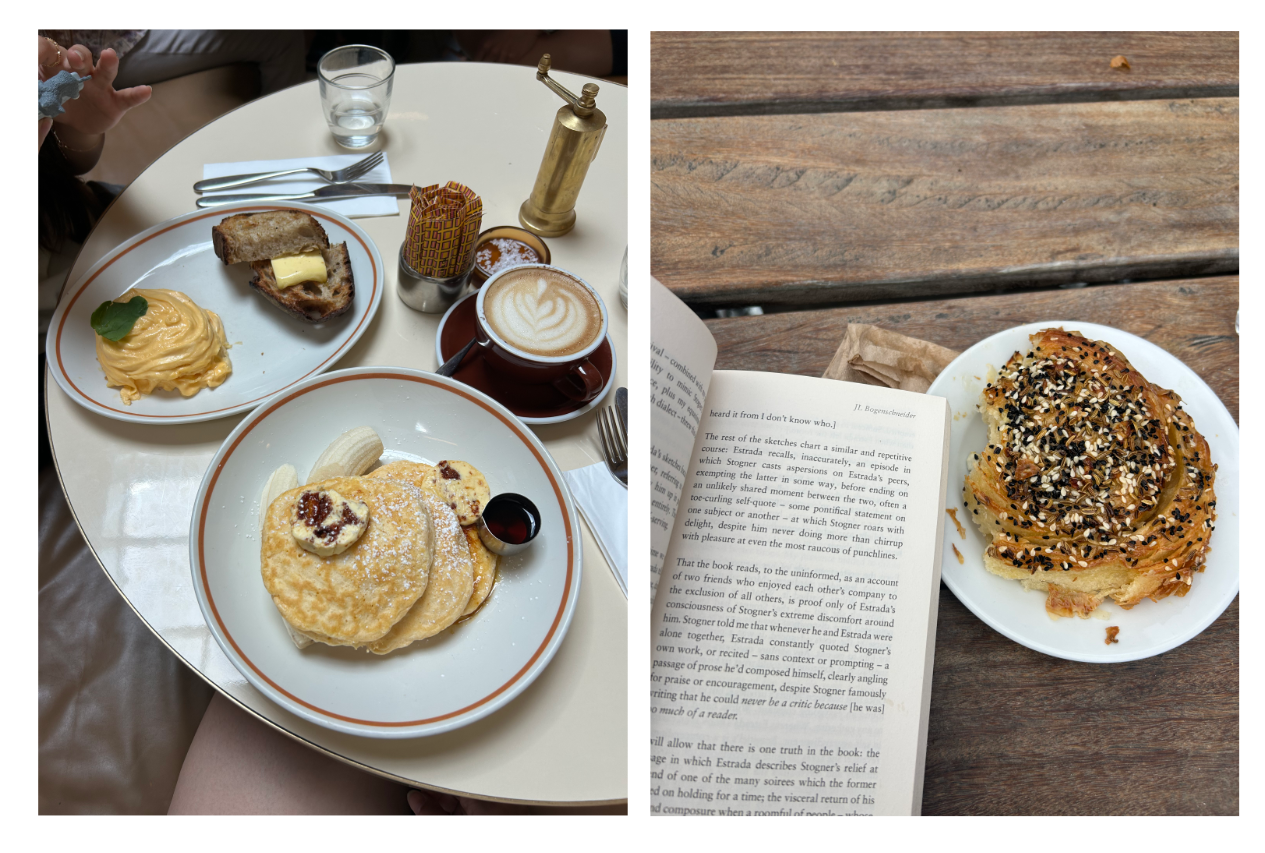
Ideas for connection: Invest in IRL relationships
Honestly: Call your mum. Send updates in the group chat (any group chat), and don’t be afraid to ask for updates too. Enjoy being inside the constellation of people around you. Be better invested and interested in the lives of your siblings, your friends.
Most of my friends don’t actively post on social media, so talking about our lives over coffee will casually last for three hours – and I love it. Not too long ago, a friend was surprised when I told her I don’t go to networking events, and that the best I do is cold-email people to ask if they’d be down to chat over coffee.
There is joy to be relished when talking heart-to-heart, discovering like-mindedness, or spilling life updates in-person. Instagram, LinkedIn, and other digital connections seem high-stakes, but they are actually low – it costs nothing to lose one. As much as possible nowadays, I take every update or as many friendships as I can offline.
Ideas for fulfilment: Be curious about your creative practice
When I feel the gravity of needing to perform on Substack outweighing my love and enjoyment of the craft of writing itself, I try my best to pull it back towards genuine curiosity over my own practice:
What am I writing about this week that I’ve never written about before?
What articles spoke to me (be it through their topic, or their writing style) and why?
Which pieces take a lot more or less time to create, and why? What feels natural to me, and what doesn’t?
For artists, spaces for creative or self expression are becoming restricted to algorithmically driven platforms. Curiosity about our own growth offers us a way alleviate some of that tension. By applying a lens of curiosity, I treat my writings less as a series of shows that need to sell out tickets, and more like an ecosystem I’m just cultivating over time – where anyone is welcome.
Ideas for community: The public library
If you are lucky enough to live in a town where a library exists – or where a council puts up a newsletter or a bulletin board, even a WhatsApp group – you may be surprised at the many opportunities you have to go outside and meet people. In fact, IRL book clubs, run clubs, mum and dad meet-ups are back in fashion. Most of the time, no one would mind if you step into a book club and just listen, or take up a chess game when you’ve never played in years. They are glad you’re there.
So many of my most rewarding encounters with strangers happened from devoting just one free evening to attending an event by myself – and once I get past the first five minutes of awkwardness, or better yet, acknowledge the feeling with the person sitting next to me, the rest becomes history.
Ideas for belonging: Become a regular
Riley Harper in their piece, The Art of Being a Regular, writes: “Everyone needs a place where they are known.” If there’s a café, deli, bakery, mini grocery store, within a 3km radius that you visit regularly enough, make the first move of being properly introduced.
Five years ago, when I lived a few suburbs away, it took me months to muster up the courage with a café across my train station. I frequented it every week, and saw that everyone who lined up were regulars but me. I couldn’t be bold enough to ask for their name and give them mine, until one morning, I did. Fast forward to a month later, and the owner – Tony was his name – would ask me where I’d been if he hadn’t seen me for a week. His nephew knew my orders before I asked.
That is the beauty of being a regular. You are known, but also anonymous in many ways. Though a small act, I think it is a sign of being ready to call a place home.
Ideas for validation: Asking for it, literally
I don’t subscribe to the hyper-individualistic culture of self help gurus that advise us to simply believe in ourselves and “stop seeking for validation”. We all reach a point, hopefully, as we grow up and reach different life stages, where external validation matters to us less and less. However, we can also be 15, 35, or 70, and still need the basic affirmation that we are seen and loved – either from parents, partners, or friends. Craving it is not a moral fault.
The issue, I think, lies in how algorithms and platforms have long exploited this vulnerability. An imperfect antidote, I think, can simply involve being honest with ourselves and those we trust about what we need from them, and finding the right, healthy channels from which we can gain that affirmation.
Quite often, I would finish a draft for a writing piece and send it to a friend or two whose judgment I trust. They could be people who know me well, or people who know the process of writing well. Applying this to not just our work, but our everyday lives, can help us. All the time, I sit with a friend (or three) before I make an important decision. I spell out to my partner what I need to hear him say to make me feel like I matter (crucial as a Words of Affirmation girlie!) I think, culturally, it’s something we should be ashamed of less and something we’re ready to begin to normalise.
Jo is currently listening to the Big Small Talk podcast and Salt Then Sour Then Sweet by Sara Bareilles and Brandi Carlile.
When or where do you feel released from the pressure to perform?
Elkind, D., & Bowen, R. (1979). Imaginary audience behavior in children and adolescents. Developmental Psychology, 15(1), 38–44. https://doi.org/10.1037/0012-1649.15.1.38
Hi jo! I really like the bit where you compare your writing to an ecosystem instead of a series of shows. Cultivating sounds nice..
Nice reminder! Thank you for the beautiful piece🫶